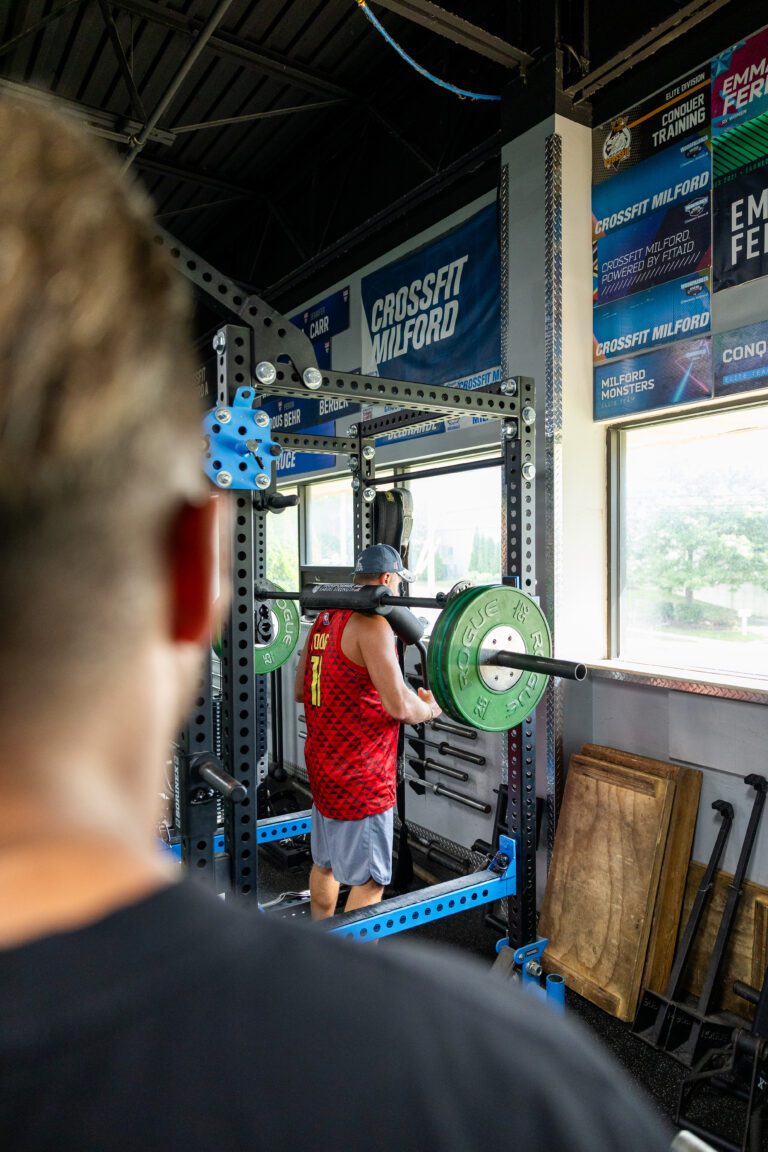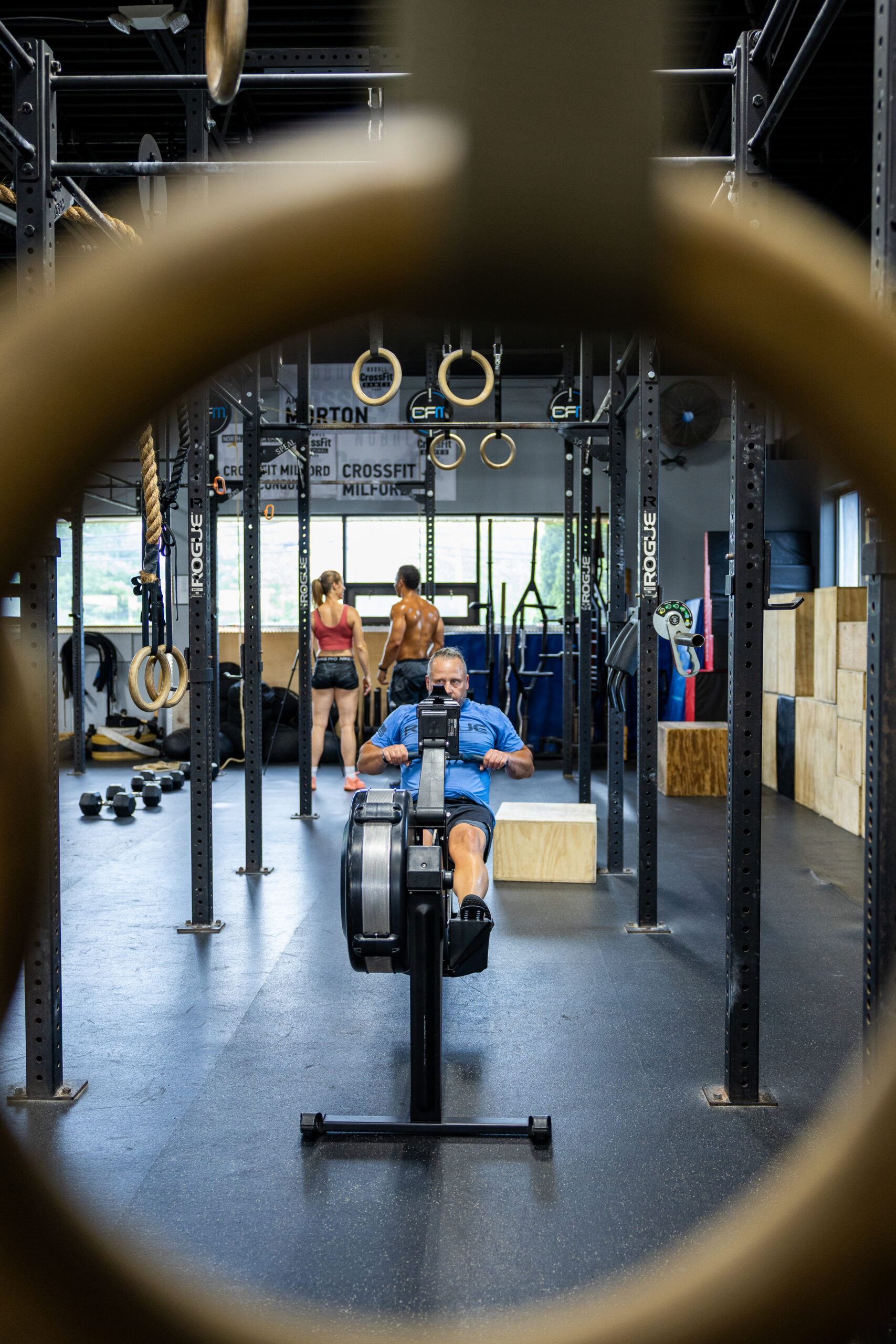
HYROX is not just about who can suffer the most. It is about who can sustain the highest output, recover while moving, and avoid falling apart when fatigue starts to stack.
That is why one of the most effective ways to improve your next HYROX event is not simply doing harder workouts. It is building the right engine in the right order.
At CrossFit Milford, when we look at HYROX training, we do not just see running, sleds, wall balls, lunges, rowing, skiing, and carries. We see a repeatability test. You have to run hard, complete a station, recover while running again, and continue producing work for the entire race. That requires more than toughness. It requires a strong aerobic threshold first, followed by a well-developed anaerobic threshold.
Your aerobic threshold is the foundation of your engine. This is the intensity where you can work for a long time, control your breathing, manage your heart rate, and recover efficiently. It is not always flashy, and it does not always feel exciting, but it is one of the most important qualities for HYROX performance.
The stronger your aerobic threshold is, the better you can handle the total volume of the race. In HYROX, you are not just doing one hard effort. Every run, every sled push, every row, every carry, every lunge, and every wall ball adds stress to the system. If your aerobic base is underdeveloped, you may feel good early, but eventually you will start paying for it.
Your breathing gets away from you. Your transitions slow down. Your running pace drops. Your legs feel heavy. Your ability to recover between efforts starts to disappear.
This is why the aerobic system has to be built first. A better aerobic threshold allows you to hold a stronger pace without crossing the line too early. It gives you more control. It helps you recover faster between stations. It allows you to stay composed instead of constantly fighting to survive the next piece of the race.
Building your aerobic threshold does not mean crushing yourself every session. In many cases, it means the opposite. This work should be controlled, repeatable, and sustainable. Long Zone 2 work, steady mixed-modal sessions, controlled running volume, and longer intervals at sustainable efforts all play a major role. The goal is not to finish every session destroyed. The goal is to build capacity without digging a recovery hole.
Once that aerobic foundation is in place, the next layer is improving your anaerobic threshold. This is where HYROX training becomes more race-specific.
Your anaerobic threshold is the point where intensity becomes much harder to sustain. It is where breathing gets heavier, fatigue starts accumulating faster, and your ability to hold pace becomes more limited. In simple terms, it is the line between hard and too hard.
For HYROX, improving this threshold is massive. The better your anaerobic threshold is, the faster you can move before you blow up. You can run faster between stations, push harder on the sled, hold better outputs on the rower and ski, and manage wall balls under fatigue without completely falling apart.
But this only works when it is built on top of a strong aerobic base. If you skip the base and only chase hard intervals, you may feel fit for a short period of time, but you often lack the ability to recover, repeat, and sustain that output across the full race. HYROX rewards the athlete who can repeat hard efforts, not just produce one hard effort.
Anaerobic threshold training should be intentional. This could look like tempo run intervals, machine threshold work, or HYROX-specific pieces that combine running with stations while keeping the effort just below redline. The goal is controlled intensity with a purpose. You should feel challenged, but you should still be able to maintain your pace, mechanics, and decision-making.
A lot of athletes make the mistake of jumping straight into race simulations. They throw together sleds, wall balls, burpees, lunges, carries, and running and call it HYROX training. There is a time and place for race-specific work, but if that is all you do, you are missing the bigger picture.
You need phases. First, build the aerobic threshold. Then improve the anaerobic threshold. Then sharpen race-specific skills, transitions, pacing, and execution.
At CrossFit Milford, our HYROX training is built around progression, not randomness. We want to develop the qualities that actually transfer to better race-day performance. That means building your aerobic base, improving your running capacity, developing strength endurance, training stations with better efficiency, raising your anaerobic threshold, practicing transitions, and learning pacing strategies.
The goal is not just to make you tired. The goal is to make you better.
If you want to improve your next HYROX event, stop chasing harder workouts just for the sake of suffering. Build the engine first. Improve your aerobic threshold so you can handle more work, recover faster, and sustain better pacing. Then improve your anaerobic threshold so you can operate at a higher intensity without falling apart.
HYROX is a test of strength, endurance, pacing, durability, and repeatability. The better your thresholds are, the better you can express all of those qualities on race day.
At CrossFit Milford, we help athletes train with purpose so they can show up prepared, confident, and ready to perform.